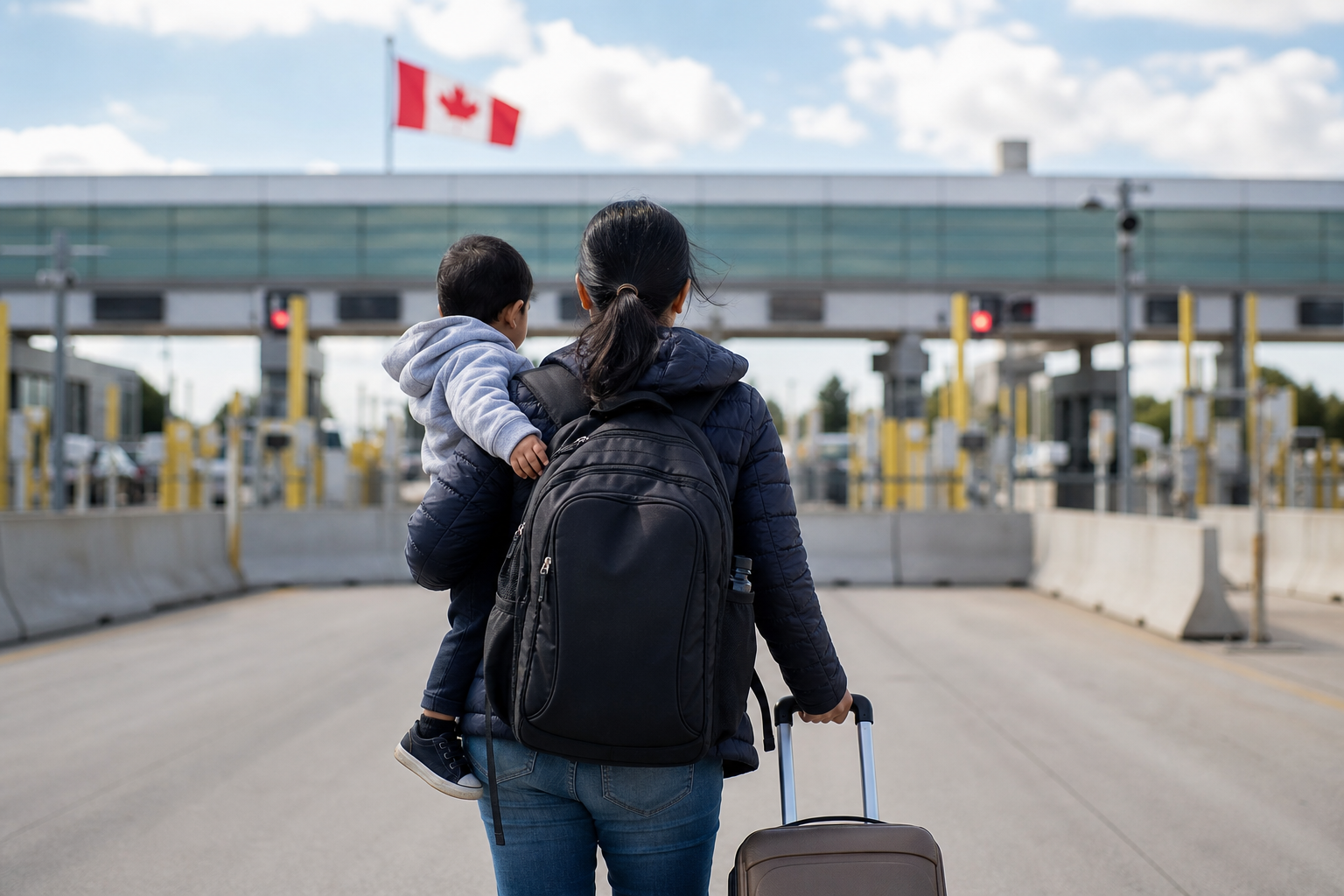
A refugee claim in Canada is a life-changing legal proceeding. It is not an immigration "application" in the ordinary sense — it is a quasi-judicial hearing before the Immigration and Refugee Board (IRB) where you must prove, on a balance of probabilities, that you face a serious risk in your home country. The process is rigorous, evidence-intensive, and unforgiving of mistakes. This guide explains how it works in 2026, what the legal test really is, and how to prepare.
Two Grounds: Convention Refugee and Person in Need of Protection
Canadian refugee law has two parallel grounds, both decided by the Refugee Protection Division (RPD) of the IRB:
Section 96 — Convention Refugee
You must show a well-founded fear of persecution in your country of nationality (or habitual residence if stateless) for reasons of:
- Race
- Religion
- Nationality
- Political opinion
- Membership in a particular social group (including gender, sexual orientation, family, etc.)
"Persecution" means serious harm — not mere discrimination or harassment, but harm that is sustained, systemic, or grave (death, torture, imprisonment, severe deprivation of fundamental rights). The harm must be inflicted by the state, or by non-state actors the state cannot or will not control.
Section 97 — Person in Need of Protection
If you do not fall under one of the five Convention grounds, you may still qualify if removal would subject you to:
- A risk of torture under the UN Convention Against Torture, or
- A risk to life or of cruel and unusual treatment or punishment, not faced generally by others in the country, and not caused by inadequate health or medical care.
Who Cannot Claim
You may be ineligible to make a claim if any of the following apply (s. 101 IRPA):
- You arrived from the United States at a land border (the Safe Third Country Agreement applies, with limited exceptions for family ties, unaccompanied minors, document holders, and public interest).
- You have a prior refused claim in Canada.
- You have been recognized as a refugee in another country to which you can return.
- You are inadmissible on serious criminality, security, or human rights violations.
- You have already been granted protection in Canada.
If you are ineligible, you may still access a Pre-Removal Risk Assessment (PRRA) before removal — see our PRRA guide.
How to Make a Claim
You can claim refugee protection in two ways:
- At the port of entry (airport or land border) — you tell a CBSA officer you wish to claim. They will interview you, take biometrics, and either refer the claim to the RPD or find you ineligible.
- Inland, at an IRCC office or online via the IRCC Portal — used by people already in Canada.
You must complete a Basis of Claim (BOC) form within 15 days of referral (port of entry) or at the time of claim (inland). The BOC is the single most important document in your file: it tells your story under oath, and inconsistencies between the BOC and your hearing testimony are the #1 reason claims are refused on credibility.
The Hearing
The RPD hearing is held before a single member (decision-maker) and typically lasts 2–6 hours. Most claims are heard within 6–18 months of referral in 2026.
You are entitled to:
- Counsel (a lawyer, paralegal, or RCIC).
- An interpreter in your preferred language at no cost.
- A closed hearing (the public cannot attend).
- The Minister's intervention in some cases — counsel for the Minister will cross-examine you.
You must:
- Submit all documentary evidence at least 10 days before the hearing.
- Bring original identity documents.
- Tell your story consistently and in detail.
- Answer questions about country conditions, your route to Canada, and your fear.
What the Member Decides
The member must determine:
- Credibility — Are you telling the truth about who you are and what happened?
- Identity — Do you have acceptable identity documents?
- Nexus — Do your facts fit a Convention ground or s. 97?
- Objective basis — Do country conditions support your subjective fear?
- State protection — Could you reasonably have obtained protection from your government?
- Internal flight alternative (IFA) — Could you have safely relocated within your country?
The standard of proof is the balance of probabilities for facts, but only a reasonable chance (more than a mere possibility) is required to establish forward-looking risk.
After a Positive Decision
If your claim is accepted, you become a protected person. You can apply for PR within 180 days under the Protected Person Class. PR processing takes 18–36 months. You can also sponsor your spouse and dependent children abroad through the One-Year Window of Opportunity (OYW).
After a Negative Decision
You may have a right to appeal to the Refugee Appeal Division (RAD) within 15 days if your claim was not designated under DFN, STCA-exception, manifestly unfounded, or no credible basis findings. RAD reviews on the record and may admit new evidence in limited circumstances.
If RAD also refuses, you may apply for judicial review at the Federal Court within 15 days. If all reviews fail, you face removal. Before removal, you can apply for a PRRA if 12+ months have passed.
What to Prepare — Evidence Checklist
- Identity documents — passport, national ID, birth certificate, school records, military records.
- Personal narrative — chronological, dated, named, with corroborating documents.
- Sworn statements from family, friends, neighbors, colleagues who witnessed events.
- Medical and psychological reports documenting injuries and trauma.
- Police, court, and government documents from your country.
- Photographs and videos of injuries, damage, or events.
- Country-condition documentation: US DOS Human Rights Report, UK Home Office, UNHCR, Human Rights Watch, Amnesty International, Freedom House, Immigration and Refugee Board National Documentation Package (NDP).
- Expert reports where appropriate (country experts, medical, psychological, gender-based violence).
Every document not in English or French must be translated by a certified translator and accompanied by a translator's declaration.
Common Reasons Claims Are Refused
- Inconsistencies between the BOC and testimony.
- Lack of credibility on key facts (especially identity).
- Failure to claim asylum in a transit country.
- Re-availment (returning to the country of feared persecution).
- Internal flight alternative within the country.
- State protection available.
- Generalized risk (s. 97 specifically excludes risks faced generally).
Working and Studying While Your Claim Is Pending
Claimants are eligible for an open work permit once their claim is referred to the RPD and medicals are passed (typically within 30–60 days). Children can attend public school. Provincial healthcare via the Interim Federal Health Program (IFHP) covers most basic and emergency care.
Frequently Asked Questions
Can I travel home while my claim is pending? No. Returning to the country of alleged persecution is treated as re-availment and almost always destroys the claim.
How long does the whole process take? 6–18 months for the hearing, plus 3–6 months for RAD if appealed, plus 4–8 months for Federal Court if applied for. PR processing after acceptance is an additional 18–36 months.
Is making a refugee claim a "free shot" at staying in Canada? No. A refused claim creates a permanent record, triggers a one-year bar on H&C, restricts PRRA for 12 months, and ends in removal.
Can I claim refugee status if I already have a work or study permit? Yes. Many claims are made by people already in Canada on temporary status. Filing a refugee claim does not by itself affect your existing permit, but it changes your immigration trajectory significantly.
Do I need a lawyer or RCIC? Strongly recommended. Self-represented claimants have markedly lower success rates. Legal aid is available in most provinces for low-income claimants.
Next Steps
- Free Assessment — If you fear return to your country, we can help you understand the realistic strength of a refugee claim. Start your free assessment.
- Book a Consultation — A refugee hearing is a one-shot proceeding. Book a consultation before filing the BOC.