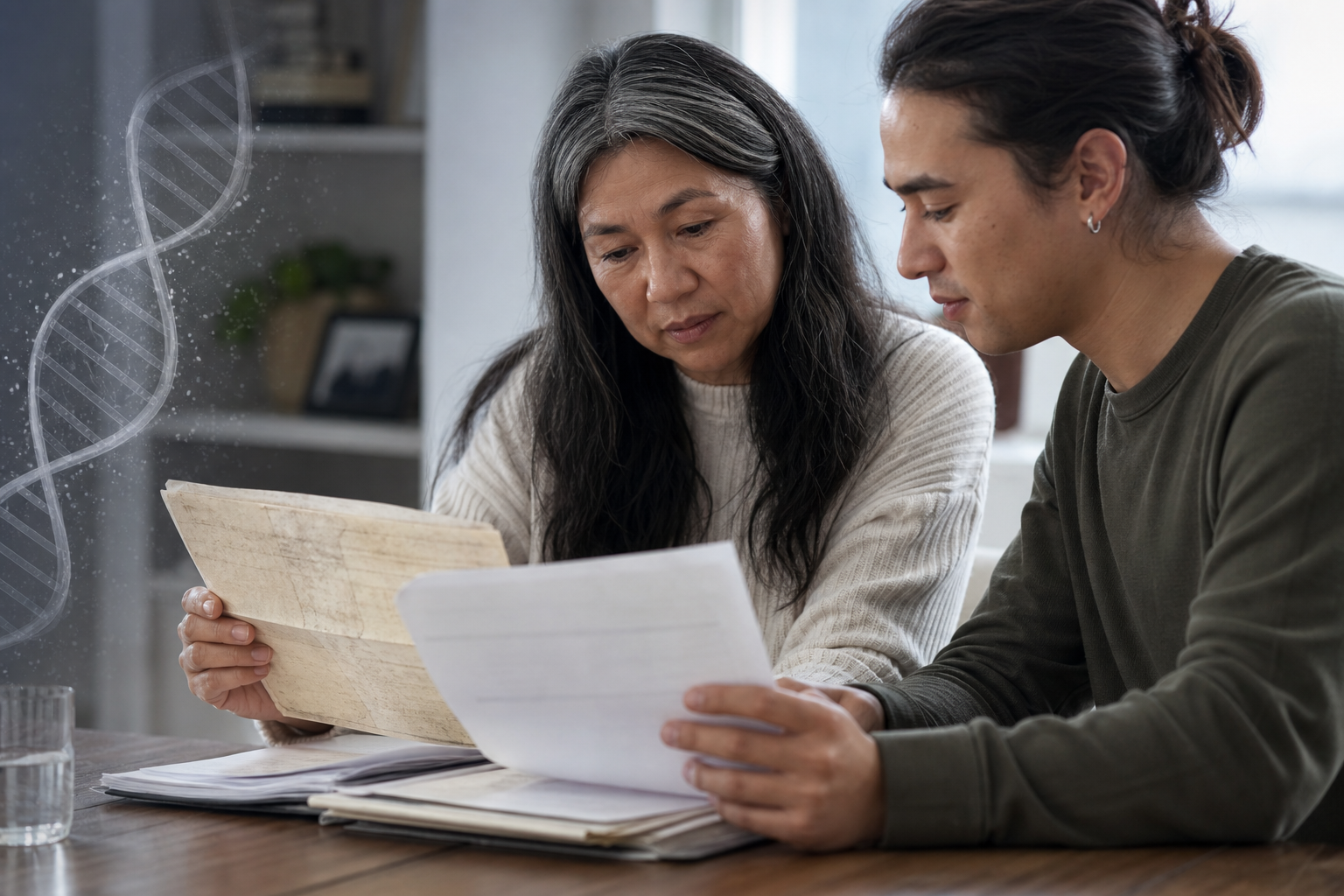
Canada Immigration DNA Testing Series — Part 6
A missing birth certificate is one of the most common concerns raised in family immigration cases.
Applicants often ask:
- My birth certificate was never issued. Can I still apply?
- The birth certificate has been lost. What should I do?
- My name is spelled differently on different documents.
- My parent's name is incorrect on the birth record.
- The birth certificate was issued many years after I was born.
- Will IRCC automatically require a DNA test?
The short answer is:
No. A missing or imperfect birth certificate does not automatically mean that IRCC will require DNA testing.
Canadian immigration officers normally assess the entire body of evidence available to establish a family relationship. DNA testing may become relevant in some cases, but it is generally considered as part of the evidentiary process rather than as a replacement for every missing document.
1. Is a Birth Certificate Always Required?
Birth certificates are among the most common documents used to establish relationships such as:
- parent and child;
- siblings;
- grandparents and grandchildren; and
- other family relationships.
However, immigration cases are not always straightforward.
Depending on the country, age of the applicant and historical circumstances, a birth certificate may:
- never have been issued;
- have been destroyed;
- be unavailable from the issuing authority;
- contain clerical errors;
- have been issued many years after birth; or
- conflict with other records.
A document problem does not necessarily mean that the claimed relationship cannot be established.
The important question is whether the relationship can be supported by reliable evidence as a whole.
2. What If the Birth Certificate Is Missing?
If a birth certificate is unavailable, applicants should generally first determine whether an official replacement or certified copy can be obtained.
If it cannot, other documents may help demonstrate the relationship, depending on the circumstances.
Examples may include:
- family or household registration records;
- hospital birth records;
- baptism or religious records;
- school records;
- passports;
- identity documents;
- old immigration records;
- court documents;
- adoption records, where applicable; and
- other official records that identify family relationships.
No single alternative document is guaranteed to replace a birth certificate in every case.
Instead, the overall consistency and reliability of the available evidence are considered.
3. What If the Birth Certificate Contains an Error?
This is also common.
Examples include:
- a misspelled name;
- a different date of birth;
- an incorrect parent's name;
- a missing middle name;
- differences between transliterated names; or
- records created under an earlier naming system.
A minor clerical error does not automatically invalidate the relationship.
The issue is whether the available documents, taken together, provide a coherent explanation.
For example, an applicant may have:
- a birth certificate with one spelling;
- a passport with another spelling;
- a school record using the same alternate spelling; and
- a legal name-change document explaining the difference.
When documents consistently explain the discrepancy, the relationship may still be capable of being established without DNA testing.
4. When Might IRCC Ask for DNA Testing?
DNA testing is not a routine requirement for every family immigration application.
It may become relevant when, after reviewing the available evidence, the claimed biological relationship cannot be satisfactorily established through documents alone.
Examples may include situations where:
- no birth certificate is available;
- multiple documents contain conflicting information;
- official records are incomplete;
- historical records are unreliable; or
- the relationship remains unclear after other evidence has been considered.
The key point is:
A missing document does not automatically trigger DNA testing.
Rather, DNA may become relevant when documentary evidence remains insufficient to establish the biological relationship.
5. Can DNA Replace a Birth Certificate?
Not exactly.
A DNA test and a birth certificate prove different things.
A birth certificate is a civil record documenting a birth and, in many jurisdictions, the legal parentage recorded at that time.
A DNA relationship test addresses a biological question, such as whether a tested parent and child are biologically related.
Therefore, DNA does not recreate a missing civil record.
Instead, where appropriate, it may provide biological evidence that supplements the documentary evidence in a particular case.
This distinction is important.
6. Example 1 — Birth Certificate Lost
Suppose an applicant was born decades ago.
The original birth certificate has been lost, and the local authority no longer has the historical record.
The applicant is still able to provide:
- old school records;
- a passport;
- family registration documents;
- the parent's identity documents; and
- other historical records showing the family relationship.
IRCC may review all of this evidence together.
DNA testing is not automatically required simply because the birth certificate is unavailable.
7. Example 2 — Parent's Name Is Incorrect
Suppose a birth certificate lists the father's name incorrectly because of a clerical mistake.
The applicant also has:
- the father's passport;
- household registration records;
- school records;
- family documents; and
- other records consistently identifying the same father.
The inconsistency may be explainable through the documentary record.
Again, DNA testing is not automatically required.
8. Example 3 — No Reliable Documentary Evidence
Now consider a different situation.
There is:
- no birth certificate;
- no replacement record;
- no household registration;
- no historical school record;
- conflicting family documents; and
- no reliable official evidence clearly establishing the parent-child relationship.
In this type of case, DNA testing may become a much more significant evidentiary option if IRCC requests further proof of the biological relationship.
This illustrates the difference between:
a document problem
and
an evidence problem.
A single missing document may not be decisive.
A complete lack of reliable evidence is much more likely to create the need for additional proof.
9. Should You Order a DNA Test Before IRCC Requests One?
Usually, it is better not to assume that DNA testing is necessary.
First consider:
- Can an official replacement birth certificate be obtained?
- Are there other reliable documents establishing the relationship?
- Is there an explanation for any discrepancy?
- Has IRCC actually requested additional evidence?
If DNA testing has not been requested, arranging a test prematurely may not be necessary.
If IRCC later requests DNA testing, the instructions in that request should be followed before samples are collected.
10. If IRCC Requests DNA Testing
Once an official request is received, do not simply purchase a home DNA kit.
Before collection, confirm:
- who needs to participate;
- what the DNA test is intended to establish;
- whether the correspondence specifies laboratory requirements;
- how identity verification should occur;
- how samples should be collected; and
- how the report is expected to be submitted.
As explained in earlier articles in this series, official-purpose DNA testing may involve procedures that differ from private home testing.
11. DNA Testing Coordination
KINORA DNA assists with DNA testing coordination and professional sample-collection arrangements in Canada and internationally.
KINORA DNA services include:
- Immigration DNA testing coordination
- Professional DNA sample collection in Canada
- Identity-verification support
- Chain-of-custody sample-collection coordination
- International DNA sample-collection arrangements
- Paternity and maternity DNA testing coordination
- Parent-child relationship DNA testing
- Other family relationship DNA testing
If you have received an IRCC DNA testing request, prepare the following information before arranging collection:
Purpose of the test: IRCC, citizenship, court, another government authority or private use
Participants: Who needs to provide DNA samples?
Locations: Country and city of each participant
Official correspondence: Any DNA testing instructions received from IRCC or another authority
KINORA DNA
DNA Testing and Professional Sample Collection Coordination
Website: kinoradna.com
Email: hello@kinoradna.com
Canadian and international DNA sample-collection arrangements are available for consultation.
Important: A missing birth certificate does not automatically mean DNA testing is required. If IRCC requests DNA testing, confirm the applicable laboratory, identity-verification and sample-collection requirements before providing samples.
Frequently Asked Questions
My birth certificate is missing. Will IRCC automatically ask for DNA?
No.
A missing birth certificate alone does not automatically result in a DNA testing request. IRCC may first consider whether the family relationship can be established through other reliable documentary evidence.
Can DNA completely replace a birth certificate?
Not exactly.
A birth certificate is a civil record, while DNA testing provides biological relationship evidence. DNA may supplement the available evidence where appropriate.
What if my birth certificate has the wrong father's name?
A clerical error does not automatically mean DNA testing is required. Other documents may help explain or resolve the discrepancy.
Should I do a DNA test before applying?
Not necessarily.
If the relationship can be established through reliable documents, DNA testing may not be needed. It is generally better to determine whether DNA testing is actually required before arranging collection.
What if IRCC asks for DNA after I have already applied?
Follow the instructions in the correspondence before arranging the test. Do not assume that a private home DNA test will satisfy the request.
The Bottom Line
A missing birth certificate is a documentation issue.
It does not automatically become a DNA issue.
Canadian immigration authorities generally assess the totality of the available evidence when determining whether a family relationship has been established.
DNA testing may become relevant when documentary evidence is insufficient or when IRCC specifically requests biological proof of the relationship.
The correct sequence is:
Documents first → Additional evidence if needed → DNA testing only when appropriate or requested.
Canada Immigration DNA Testing Series
Part 1 — Immigration DNA Testing in Canada: When Can IRCC Request a DNA Test?
Part 2 — Received an IRCC DNA Test Request? Complete Guide to the Process, Laboratory, Sample Collection and Important Considerations
Part 3 — Immigration DNA Test vs. Regular Paternity Test: What’s the Difference?
Part 4 — Parent in Canada, Child in China: How Does International Immigration DNA Testing Work?
Part 5 — What Is Chain of Custody in a DNA Test? Why It Matters for Immigration
Part 6 — Missing Birth Certificate? Can a DNA Test Prove a Family Relationship for Canadian Immigration? — You are here
This article concludes the CAN-MIGRATE Canada Immigration DNA Testing Series.
This article is provided by CAN-MIGRATE for general informational purposes only and does not constitute legal or immigration advice. Immigration and citizenship requirements may change. Applicants should follow current IRCC requirements and any instructions issued specifically for their application.
出生证明丢失了,还能证明亲属关系吗?IRCC什么时候可能要求DNA检测?
加拿大移民 DNA 检测系列——第6篇
出生证明丢失,是家庭团聚和亲属关系类移民申请中比较常见的问题。
很多申请人会问:
- 我的出生证明从来没有办理过,还能申请吗?
- 出生证明丢了怎么办?
- 不同文件上的名字拼写不一样怎么办?
- 出生证明上的父亲或母亲名字写错了怎么办?
- 出生证明是很多年以后补办的,会不会有问题?
- IRCC会不会直接要求做DNA?
答案是:
不会。
出生证明缺失或者存在瑕疵,并不意味着 IRCC 一定会要求 DNA 检测。
移民官通常会综合审查现有的全部证据,判断申请人是否已经能够证明家庭关系。
DNA 检测可能在某些情况下成为补充证据,但并不是每一个出生证明问题都会走到 DNA 这一步。
一、出生证明一定要有吗?
出生证明是证明父母与子女关系最常见的文件之一。
但是现实中,很多申请人的文件并不完美。
例如:
- 从来没有办理出生证明
- 原件已经遗失
- 当地政府已经没有历史档案
- 出生证明存在笔误
- 很多年以后才补办
- 与其他文件信息不一致
这些情况本身并不意味着亲属关系无法证明。
真正的问题是:
现有证据能不能整体上证明这段家庭关系。
二、没有出生证明怎么办?
如果出生证明遗失,首先应该考虑能否从原发证机关申请补发或者认证副本。
如果确实无法取得,其他文件可能也有助于证明亲属关系,例如:
- 户籍或家庭登记文件
- 医院出生记录
- 宗教或洗礼记录
- 学校档案
- 护照
- 身份证件
- 旧移民文件
- 法院文件
- 收养记录
- 其他能够显示家庭关系的官方材料
并不是任何一份替代文件都能自动代替出生证明。
移民官通常会看这些文件之间是否能够相互印证。
三、出生证明上有错误怎么办?
这种情况也很常见。
例如:
- 名字拼错
- 出生日期有差异
- 父母名字写错
- 缺少中间名
- 中文姓名不同拼音
- 早期登记制度不同
一个小的笔误,并不意味着亲属关系就无法成立。
关键在于其他文件能否合理解释这个差异。
例如:
- 出生证明使用一个拼写
- 护照使用另一个拼写
- 学校记录也使用第二个拼写
- 还有改名证明解释原因
如果所有文件能够形成合理的证据链,未必需要 DNA。
四、IRCC什么时候可能要求DNA?
DNA 检测并不是所有家庭团聚案件的常规要求。
一般来说,只有在审查现有文件后,生物学亲属关系仍然无法令人满意地确认时,DNA 才可能成为进一步的证据。
例如:
- 完全没有出生证明
- 多份文件互相矛盾
- 官方档案严重缺失
- 历史记录无法核实
- 其他证据仍不足以证明亲属关系
需要注意的是:
缺少一份文件,不等于一定需要 DNA。
真正容易导致进一步要求的是:
整体证据仍然不足。
五、DNA能不能代替出生证明?
不能完全这样理解。
出生证明和 DNA 检测证明的是不同的问题。
出生证明属于民事登记文件,记录出生以及登记的父母关系。
DNA 检测回答的是:
参加检测的人之间是否存在生物学关系。
因此,DNA 并不是重新制造一份出生证明。
在适当情况下,它可能作为生物学证据补充现有文件。
六、案例一:出生证明丢失
假设申请人出生于几十年前。
原来的出生证明已经遗失,当地政府也找不到历史档案。
但是申请人仍然能够提供:
- 旧学校记录
- 护照
- 家庭登记材料
- 父母身份证件
- 其他历史文件
IRCC 可能会综合审查这些材料。
仅仅因为出生证明丢失,并不意味着一定要求 DNA。
七、案例二:父亲名字写错
假设出生证明上的父亲名字因为登记错误写错。
申请人同时拥有:
- 父亲护照
- 家庭登记文件
- 学校档案
- 其他家庭文件
这些材料都指向同一个人。
这种情况下,文件之间可能能够解释这个差异。
同样,并不意味着一定需要 DNA。
八、案例三:没有任何可靠文件
再看另一种情况。
申请人没有:
- 出生证明
- 补发记录
- 家庭登记
- 学校档案
- 可靠历史文件
而且现有家庭材料之间还存在矛盾。
这时候,问题已经不仅仅是“少了一份出生证明”。
而是:
缺乏足以证明亲属关系的可靠证据。
在这种情况下,如果 IRCC 要求进一步证明生物学关系,DNA 检测就可能成为重要的补充证据。
九、应该提前做DNA吗?
通常没有必要。
在安排 DNA 检测之前,可以先考虑:
- 能不能补办出生证明?
- 有没有其他可靠文件?
- 文件之间的差异能不能解释?
- IRCC 是否真的要求进一步证据?
如果 IRCC 没有要求 DNA,提前做检测未必有必要。
如果之后收到正式 DNA 通知,应先按照通知要求确认程序,再安排采样。
十、如果IRCC正式要求DNA
收到通知以后,不要直接购买 Home DNA Test。
首先确认:
- 哪些人需要参加检测
- DNA 要证明什么关系
- 是否涉及特定实验室要求
- 如何进行身份核验
- 如何采样
- 如何提交报告
正式用途的 DNA 检测可能与普通私人亲子鉴定存在不同程序。
十一、DNA检测协调服务
KINORA DNA 提供加拿大及国际 DNA 检测协调和专业样本采集安排。
服务包括:
- 移民 DNA 检测协调
- 加拿大专业 DNA 样本采集
- 身份核验支持
- Chain-of-Custody 样本采集协调
- 国际 DNA 样本采集安排
- 父子、父女亲子鉴定协调
- 母子、母女亲子鉴定协调
- 其他亲属关系 DNA 检测
如果已经收到 IRCC DNA 检测通知,咨询前可以准备:
检测用途
IRCC、公民身份、法院、其他政府机构或者私人用途。
参加检测人员
哪些人需要提供 DNA 样本?
所在地
每个人所在的国家和城市。
正式通知
IRCC 或其他机构发出的 DNA 检测要求。
KINORA DNA
DNA 检测及专业样本采集协调
网站:kinoradna.com
可咨询加拿大本地及国际 DNA 样本采集安排。
重要提示:出生证明缺失并不自动意味着需要 DNA 检测。如果 IRCC 正式要求 DNA,应在采样之前确认适用的实验室、身份核验和样本采集要求。
常见问题FAQ
出生证明丢了,IRCC一定要求DNA吗?
不一定。
IRCC 可能先审查其他可靠文件,看能否证明家庭关系。
DNA可以完全代替出生证明吗?
不能完全代替。
出生证明是民事登记文件,DNA 是生物学关系证据,两者证明的内容不同。
出生证明上的父亲名字写错了怎么办?
一个笔误并不自动意味着需要 DNA。其他文件可能能够解释或解决这个差异。
申请之前应该提前做DNA吗?
通常没有必要。
先确定现有文件是否已经足够,以及 IRCC 是否真的要求 DNA。
IRCC后来要求DNA怎么办?
按照通知中的具体要求确认实验室、身份核验和采样程序,不要自行假设普通 Home DNA Test 一定适用。
最后总结
出生证明丢失,首先是一个文件问题。
它并不会自动变成一个DNA问题。
加拿大移民申请通常首先审查全部现有证据,看亲属关系能否通过可靠文件得到证明。
只有当文件证据仍然不足,或者 IRCC 针对具体案件要求进一步证明生物学关系时,DNA 检测才可能成为补充证据。
正确的顺序是:
先审查文件 → 必要时补充其他证据 → 只有适当或被要求时再进行DNA检测。
加拿大移民DNA检测系列
第1篇:《加拿大移民DNA检测指南:IRCC什么情况下会要求亲子鉴定?》
第2篇:《收到IRCC要求做DNA检测怎么办?完整流程、实验室、采样与注意事项》
第3篇:《加拿大移民DNA检测和普通亲子鉴定有什么区别?》
第4篇:《父母在加拿大、孩子在中国:移民DNA跨国采样怎么做?》
第5篇:《DNA检测中的Chain of Custody是什么?为什么移民亲子鉴定需要身份核验?》
第6篇:《出生证明丢失了,还能证明亲属关系吗?IRCC什么时候可能要求DNA检测?》——本文
本文为 CAN-MIGRATE「加拿大移民 DNA 检测系列」的最后一篇。
本文由 CAN-MIGRATE 提供,仅供一般信息参考,不构成法律意见或移民法律意见。加拿大移民及公民身份要求可能发生变化,申请人应遵循 IRCC 最新规定以及针对本人申请发出的具体通知。